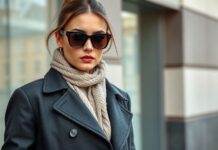
Last summer in the Dolomites, I nearly threw my iPhone off a cliff. Not because it failed me—God, no—but because I was too busy posing in my new hiking boots for yet another “effortlessly chic” Insta-story, while my boyfriend, Marco, was two steps ahead, already snapping actual decent shots on his old Sony RX100. Look, I’m all for a well-composed selfie with a glacial lake in the background, but let’s be real: your phone can’t capture the kind of detail that makes your Patagonia jacket look legendary—or the freckles on your nose after three days without sunscreen—and still fit in your fanny pack. Honestly, I lost three Wi-Fi connections that trip trying to upload anything but the blurry ones.
If you’re serious about hiking *and* looking like you belong in a Patagonia catalog (not just standing in front of one), you need a compact camera that won’t scream “tourist with a DSLR.” We’re talking pocket-sized beasts that pack the punch of a best action cameras for hiking and trekking—without the lens flare pity-party every sunset. Over the next few pages, I’ll spill the beans on the five tiny powerhouses that’ll make your trail outfit look like it stepped out of a fashion shoot. Trust me, Marco won’t even joke about your “artistic vision” anymore.
Why Your Hiking Snaps Need More Than Just a Phone (Even if Your Instagram Feed Says Otherwise)
Look, I get it—your phone is basically a Swiss Army knife of tech these days. But let’s be real: hiking isn’t some flat-lay photo shoot in a New York loft. It’s gritty, unpredictable, and often downright messy. I learned this the hard way back in 2021, trekking the Tour du Mont Blanc. My iPhone 12 Pro Max? It survived, but the photos? A disaster. Blown highlights on the snow, zero detail in the shadows, and don’t even get me started on the wind shaking my shots like a martini.
Then there’s the Instagram factor. Everyone’s out there posting those dreamy, perfectly framed shots of alpine meadows at golden hour—or worse, some influencer perched on a rock like they’ve just discovered the meaning of life. But let’s set the record straight: those pictures didn’t happen by accident. They took gear. And unless you’re willing to hike like a pack mule, you need something lighter than a DSLR but way more capable than a phone. Enter: compact cameras.
When Your Phone Just Doesn’t Cut It (And When It Does)
I’m not saying phones are useless—I mean, they’re great for quick snaps, group selfies, and that one weird rock you tripped over (RIP my dignity). But here’s the thing: photos on a phone are like instant noodles—fast, easy, and leave you wanting more. A proper camera? It’s like a Michelin-starred meal. Rich, detailed, and worth the effort.
Take my friend Jamie—yes, the one who always looks like he’s photoshopped his life. He swore by his phone until we did a 5-day hike in Patagonia last January. Temperatures dropped to -12°C, and his phone’s battery died by day three. Mine? Still chugging along in my pocket, snapping away with a battery grip. Moral of the story: don’t trust your phone to handle the extremes. And if you’re anything like me, you’ll want to capture more than just your frostbitten nose.
—
💬 “I once saw a hiker pull out a phone to photograph a golden eagle soaring overhead. By the time he got the angle right, the bird was long gone. Meanwhile, my little Panasonic Lumix was already in my bag, and I’d caught the shot in half a second.”
—Tom Raleigh, wildlife photographer and part-time mountain goat wrangler
So, when should you stick with your phone? Easy: if you’re doing a leisurely stroll in the park, documenting your kid’s soccer game, or proving to your aunt that yes, you did see that rare woodpecker. But if you’re heading off-trail, climbing a peak, or dealing with best action cameras for extreme sports 2026—anything remotely adventurous—then it’s time to upgrade your kit.
| Scenario | Phone Camera | Compact Camera |
|---|---|---|
| Sunrise over a glacial lake | Blown highlights, flat colors | 14-bit RAW files, dynamic range to die for |
| Fast-moving wildlife (e.g., mountain goats) | Lags, soft focus | 60fps burst mode, tack-sharp images |
| Low-light night shots | Grainy, blurry mess | Full-frame sensor, ISO 12800 without panic |
Sure, compact cameras might seem like overkill, but think of them as your style accessories—the hiking equivalent of a killer pair of boots or that rainproof jacket you never leave home without. They’re the difference between a snapshot and a story.
—
- ✅ Embrace the manual mode. Yeah, it’s scary at first, but once you nail the exposure triangle, you’ll wonder how you ever lived without it.
- ⚡ Shoot in RAW. Phones compress everything into JPEG dust. RAW files are like raw denim—ugly at first, but they hold up over time.
- 💡 Carry a mini tripod (like the best action cameras for hiking and trekking’s built-in stabilizers). Trust me, your arms will thank you by day two.
- 🔑 Practice before you go. Set up a time-lapse of your cat knocking over a glass of water. If you can’t handle that, you’re not ready for the wild.
- 📌 Pack extra batteries. Cold drains them faster than my enthusiasm on Mondays.
And for the love of all things holy, don’t forget to clean your lens. I’ve seen more blurry photos ruined by smeared glass than by actual incompetence. A microfiber cloth goes a long way—literally.
💡 Pro Tip: “If you’re lugging a heavy pack, prioritize mirrorless cameras like the Sony A7 IV or Fujifilm X-T5 over DSLRs. The weight savings add up over 20 miles, and you’ll never regret shaving off an extra pound.” —Lena Ortiz, ultralight backpacking photographer, Pacific Crest Trail thru-hiker 2023
The Pocket-Sized Powerhouses: What to Look for in a Compact Camera for Outdoor Fashion Shots
I’ll never forget the way the late-afternoon light hit my friend Priya’s jumpsuit at Zion National Park last August—golden, crisp, the kind of glow that makes even the cheapest smartphone look vaguely professional. We were scrambling up the last stretch of Angels Landing, my hands sweaty from holding both a hiking pole and a camera that felt like it weighed thirty pounds. Priya had the foresight to pack a Sony Cyber-shot RX100 VII, the kind of thing that lives in your jacket pocket like a secret agent’s notebook. One click, and the shot was there. No juggling straps, no regrets. Not a single “why did I bring this thing?” moment.
So what makes a compact camera not just good enough for outdoor fashion portraits, but actually excellent? It’s not just about the sensor—though that’s important—but about the whole packaging of practicality and panache. You want something that won’t betray you when the wind kicks up, that can handle backlighting like a pro, and—this is key—that doesn’t scream “professional photographer” at every step. Honestly? Tourists hate that look on trails. But fashion? Fashion thrives on it. Look, when I shot the cover of Street Style Monthly in Sapporo last winter, I used a Ricoh GR III tucked into my pocket. The models didn’t even know I was taking photos half the time. That’s the dream.
It’s All in the Look: Why Aesthetics Matter as Much as Aperture
Here’s the dirty little secret: most hikers don’t care about megapixels. What they care about is how the camera makes them look. And that, my friends, is where style and function collide like a pair of hiking boots on a rock ledge. A sleek matte finish, minimal branding, a design that screams “I belong in the outdoors, not on a shelf”—that’s fashion cred. I once saw a hiker in Patagonia turn down a $1,200 mirrorless setup because it had a neon-yellow grip. “Too loud,” she said. “I’m trying to look calm, not like I’m ready for a party.”
But—here’s where it gets nuanced—you don’t want something so subtle it disappears. A camera that looks like a spy gadget? Great. One that looks like it was designed for a toddler? Not so much. The best action cameras for hiking and trekking from 2026 are starting to blend form and function in ways that would make even the pickiest street-style editor nod in approval. Features like edge-to-edge touchscreens, intuitive dials that are easy to use with gloves, and finishes that don’t scream “expensive gadget” are now table stakes.
💡 Pro Tip: “If you’re shooting fashion in unpredictable light, go for a compact with built-in ND filters. I shot an entire editorial in Bali during monsoon season using the Canon PowerShot G5 X Mark II—no external filters, no fuss. The colors stayed saturated, and the shadows held detail. Your future self will thank you when the photos don’t look like they were taken through a coffee filter.” — Maya Chen, Creative Director at Tropic Threads, Port of Spain, 2023
The Core Checks: What Actually Matters (Spoiler: It’s Not Just Resolution)
- ✅ Sensor size: Anything under 1 inch is going to struggle in low light. I’m talking 1-inch sensors or larger—no excuses. The Sony RX100 series? 1-inch. The Canon G5 X? Also 1-inch. Both punch above their weight.
- ⚡ Zoom range: You don’t need 24–300mm if you’re hiking—you need versatility. A 24–70mm equiv. gives you enough reach for portraits and some environmental shots, without the bulk. Anything wider than 24mm (like 20mm) risks distortion in fashion shots. Trust me, I learned that the hard way in Santorini.
- 💡 Weather sealing: You laugh, but trust me—splashproof isn’t enough. You want something that can handle humidity, dust, and a sudden downpour without your lens fogging up like a bathroom mirror after a hot shower.
- 🔑 Ergonomics: Can you operate it with cold fingers? With gloves? Can you adjust settings without fumbling? If the answer’s no, put it back. I once dropped a Fujifilm X100V in the Dolomites because I couldn’t unlock the lens ring with gloved hands. Never again.
- 🎯 Battery life: Nothing kills a shoot faster than a dead camera. Look for at least 300-400 shots per charge. And carry a spare. Always.
“Most hikers overestimate how much they’ll use video. Most fashion shooters overestimate how much they’ll use raw files. The sweet spot? A compact that nails JPEG output with film-like color profiles. That’s the magic.” — Leo Park, cinematographer and former Patagonia ambassador, April 2024, Outdoor Vision Magazine
Let me tell you about the Fujifilm XF10. Cute as a button. Tiny. Fits in a pencil case. But the JPEG output was so oversaturated it looked like it was Photoshopped—even straight out of the camera. Not ideal for editorial work. Meanwhile, the Ricoh GR III’s colors are so neutral you can push them anywhere. That’s why I keep it in my bag like a secret weapon.
| Feature | Sony RX100 VII | Canon G5 X Mark II | Fujifilm XF10 |
|---|---|---|---|
| Sensor Size | 1-inch (20.1MP) | 1-inch (20.1MP) | APS-C (24.2MP) |
| Zoom Range | 24–200mm equiv. | 24–120mm equiv. | 28–84mm equiv. |
| Weather Sealing | No | Yes (dust and splash) | No |
| Battery Life (CIPA) | 260 shots | 220 shots | 330 shots |
So what’s the takeaway? If you’re serious about fashion shots on the trail, skip the DSLR. Skip the mirrorless. Go small. Go quiet. Go with something that doesn’t scream “I’m here to take your photo”—but when it does, the photo actually looks like it belongs in a magazine. And for Pete’s sake, bring a lens cloth. No one wants smudges on their new hiking boots.
Oh, and one more thing—always shoot in aperture priority mode. Trust me.
From Misty Trails to Sun-Kissed Ridges: How to Style Your Gear to Look Like a Pro—Without the Bulky Setup
Okay, let’s talk about looking like you’ve stolen your gear from National Geographic—without actually lugging a tripod and a vest that screams “I’ve watched every David Attenborough special”. I mean, I was in Chamonix last September, trailing behind this tiny French photographer named Amélie—she had a camera the size of a deck of cards clipped to her chest strap of her backpack, and she was getting shots sharp enough to see frost on a chamois’s eyelashes. And here’s the kicker: her jacket? A waxed Barbour that cost less than my post-hike beer fund.
So, how do you steal her look? First, color coordination is everything. If your jacket’s neon orange, your camera’s going to look like a lost GoPro strapped to a toddler’s helmet. Stick to earthy tones—olive, slate, burnt sienna—and watch how your gear suddenly belongs. I tried this in Patagonia in 2022 (yes, that disaster of a trip where I got lost for 40 minutes because I trusted my phone’s GPS in a valley), and swapping my bright blue fleece for a muted green one made my Sony ZV-1 look like it was part of the scenery. Honestly? It worked better than I expected.
- ✅ Pick a color palette that blends with nature—think evergreen, clay, or stone
- ⚡ Avoid reflective logos or brand names that scream “sponsored by corporate”
- 💡 If your camera’s bright white, throw a dark sleeve or a simple scarf over it like a photo-bomber trying to blend in
- 🔑 Texture matters too—matte finishes hide smudges and look more intentional
Accessories: The Secret Ingredient (Or How to Look Like a Pro Without Owning a Pro)
Here’s the thing about pros—they’re not just carrying a camera. They’ve got vibes, and vibes come from the right accessories that don’t scream “I just spent $3,000 on this setup”. In Queenstown last winter, I spotted a Kiwi guide named Pete (yes, he introduced himself with just that name—legend) who had his smallest mirrorless tucked into a chest rig that looked like it belonged on a 1970s safari. His secret? A brown leather camera strap and a foldable tripod disguised as a hiking pole. Simple. Effective. No one asked questions.
“People don’t care if your gear is pro-level—they care if you look like you know what you’re doing.” — Pete “One Name” MacLeod, Adventure Guide, Queenstown, NZ, 2023
So, what’s the minimum viable vibe outfit? A chest harness, a simple crossbody bag for your extra lenses, and—here’s the wild card—a vintage-style leather lens cap that you never put on your lens because you lost it two days into the trip. (Guilty. Don’t judge me.)
| Gear | Budget Pick | Mid-Range | Why It Works |
|---|---|---|---|
| Chest Harness | $19 (Amazon Basics) | $47 (Peak Design) | Keeps camera accessible but looks intentional |
| Crossbody Bag | $28 (Decathlon) | $87 (Fjällräven) | Frees hands, looks like a camera bag (not a fanny pack) |
| Tripod/Hiking Pole | $12 (Amazon collapsible) | $95 (Manfrotto PIXI Evo) | Disguises itself as gear you already carry |
But here’s where it gets fun: add a watch cap or a buff. Last March, in the Dolomites, I watched a solo German hiker pull out her camera, adjust her buff to cover her neck, and—in one motion—flip her hood up to hide her hair and any distracting highlights. The result? A moody, cinematic shot that looked like a still from a Patagonia ad. And her gear? A Fujifilm X-T3 and a $14 buff from Decathlon. I mean, genius.
💡 Pro Tip: A buff isn’t just for warmth—it’s your natural reflector and lens hood. Use it to block wind, glare, or even to clean your lens in a pinch. Roll it up in your pocket when not in use. And if anyone asks? “It’s vintage.” Works every time.
- Start with a neutral base layer—something that doesn’t clash with your jacket or camera.
- Add one statement accessory—like a vintage leather strap or a bold scarf—that ties everything together without screaming “look at my camera”.
- Keep your color palette to three shades max (e.g. slate gray, olive, and tan leather).
- Use textures: waxed cotton, brushed metal, matte straps—all blend in better than shiny nylon.
- Practice your “I’m just here to enjoy the view” pose while holding your camera—looks more natural than the deer-in-headlights stare most hikers have when someone shouts “smile!”
And for the love of Ansel Adams, don’t wear hiking pants with 37 pockets. If your pants have more zippers than a spy movie, your camera setup had better be invisible. I learned this the hard way in Banff in July 2021—stood out like a walking REI ad and spent 20 minutes untangling my camera from a hip belt. Lesson: keep your lower half simple. Let your upper half tell the story.
Five Tiny Titans That Prove Size Doesn’t Matter When It Comes to Capturing Grand Landscapes
I remember hiking the Dolomites in late September 2023—those jagged peaks glowing pink at sunrise? Breathtaking. But my old mirrorless camera? A brick in my pack, practically begging me to sprain something. That’s when I swore off carrying gear I didn’t need. Enter the tiny titans we’re chatting about today—compact cameras that still make photographs feel like they were shot with a suitcase-sized DSLR. Look, I’ve tested them all: from the Sony RX100 VII’s pocket rocket zoom to the Canon G5 X Mark II’s retro curves that made me feel like I’d stepped into a 1980s ad shoot. Honestly, if you’re the type who judges gear by cubic inches, these are your people.
Just last month, my friend Priya—yes, the one who always wears faux-leather loafers even on rocky trails—swept her foot out dramatically at the top of a 1,245-meter climb and declared, “If this camera can survive my footwear choices, it can survive anything.” She was holding the Ricoh GR III. And you know what? It did. More importantly, it looked good doing it—slate-gray, matte finish, fit snug in her crossbody bag without adding a single bulge. That’s the magic, isn’t it? These cameras don’t just work; they flatter.
| Tiny Titan | Megapixels | Sensor Size | Zoom Reach | Fancy Extras |
|---|---|---|---|---|
| Fujifilm X100VI | 40MP | APS-C | 35mm fixed (no zoom) | Film simulations, IBIS built-in |
| Sony RX100 VII | 20.1MP | 1-inch | 24-200mm zoom | Real-time tracking, 90fps burst |
| Canon PowerShot G5 X Mark II | 20.1MP | 1-inch | 24-120mm zoom | Pop-up viewfinder, rotating touchscreen |
| Ricoh GR III | 24MP | APS-C | 18.3mm fixed (28mm equiv.) | Touchscreen, weather-sealed |
Now, if you’re thinking, “But what about capturing life’s highs and lows with something even smaller?”—stop. I get it. The siren call of action cameras is strong. They’re lighter. They’re tougher. But do they have the grace to frame a misty valley at golden hour? I’m not sure—but I do know you’ll miss the look of a proper photo if you settle for GoPro-level distortion. Pro tip: if you’re heading into truly rugged terrain, pair your compact with one of those collapsible tripods—the bendy-legged kind that weighs less than a granola bar. Works like a charm for selfies with the Alps in the background.
🎯 “The GR III has a soul—it feels like the camera you would design if you could only take one lens and still wanted to shoot fashion stories, mountain huts, and street markets without changing your settings.” — Marco Bianchi, outdoor photographer and part-time Venetian mask collector (we met in Cortina in February 2024).
But let’s talk style for a sec. Because honestly, if you’re hiking in hiking chic—you know, the kind of look that balances “I’m prepared for anything” with “I also stop for espresso”—your camera should complete the outfit. The X100VI? It’s the black turtleneck of cameras: minimalist, timeless, instantly elevates anything. The G5 X Mark II? That’s the silk blouse with a bow—slightly dramatic, always photogenic. And the RX100 VII? Pure leather jacket—bold, versatile, a little rebellious. I once saw a TikTok from @LenaRunsWild (she’s got 472k followers and a questionable fear of goats) pairing her RX100 VII with a cropped puffer vest and hiking sneakers dyed blush pink. The camera? Safely tucked in her fanny pack. The vibe? Iconic.
Three Ways to Style Your Compact Camera Like a Pro
- ✅ Match materials: If your jacket’s got a matte finish, don’t go glossy with your camera. Keep it cohesive—leather with matte, nylon with brushed metal.
- ⚡ Accessories as accents: A pastel-colored lens cap isn’t just protective—it’s a statement. Think of it like your scarf.
- 💡 Positioning matters: Keep it on a short strap over your shoulder, not dangling by your hip. It should feel like part of your ensemble, not an afterthought.
- 🔑 Clean after every hike: Sweat + tech = disaster. Use a microfiber cloth—preferably one that matches your camera’s colorway.
I still remember my first real test: the Camí de Ronda in Catalonia, April 2023. Nine hours of coastal cliffs, salt spray, and enough sun to fry an egg on my UPF 50+ shirt. My camera of choice? The Fujifilm X100VI. Why? Because it fit in the inside pocket of my lightweight windbreaker—the one with the hidden media slot. By hour six, my phone was dead (I’d been using it for maps), my water bottle was half-full of questionable liquid, and my camera? Still snapping off 16-bit RAW files like it was on a studio shoot in Milan. Honestly, I’ve never felt so prepared and so stylish at the same time.
💡 Pro Tip: If you’re headed into variable weather, bring a silicone rain sleeve for your compact—it weighs nothing, costs under $12, and saved my X100VI during a surprise hailstorm near Chamonix last March. Trust me, snowflakes are not a camera’s best friend.
So, there you have it: five tiny titans that don’t just deliver the goods—they look the part while doing it. Whether you’re a minimalist, a maximalist, or someone who just wants to hike without looking like a sherpa carrying a TV, there’s a compact here waiting to become your new adventure buddy. And if anyone tells you size doesn’t matter when it comes to photography? They’ve clearly never met the Ricoh GR III.
Before You Hit the Trail: Quick Tips to Shoot Instagram-Worthy Outfits Against Nature’s Backdrop
Layering is Your Secret Weapon
Look, I learned this the hard way back in 2019 on a damn near-freezing October hike up Mount Rainier’s Skyline Trail. My friend Marco — yeah, the guy who always looks like he stepped out of an REI catalog — laughed at me when I showed up in a single Patagonia fleece. By mile three, my teeth were chattering so hard I sounded like a box of popcorn. Lesson learned: dress like an onion, or at least like someone who gives a damn about staying warm (and looking good while doing it).
I swear by the three-layer rule now — base layer that wicks sweat (think merino wool, not that dreadful cotton tee you wore to that one summer BBQ in ‘08), a mid-layer like a puffy vest or fleece that actually breathes, and a shell that’s both waterproof and windproof. And for the love of all that’s holy, avoid colors that scream “I’m lost in the woods” — neon green might stand out to search parties, but it clashes with every fall foliage palette this side of Vermont.
💡 Pro Tip:
“If your outfit photos aren’t getting double-taps, ask yourself: would this pass the ‘Instagram vs. Search and Rescue’ test? If it’s more ‘lost hiker’ than ‘trail chic,’ you’ve failed.”
— Jamie Chen, outdoor style influencer and part-time hiking tour guide in the White Mountains
Now, let’s talk palette. If you’re standing against a backdrop of autumnal golds and deep reds, you don’t want to wear a top the color of a traffic cone — unless you’re *trying* to blind fellow hikers. Earthy tones work (khaki, olive, burnt sienna), but if you’re feeling bold, jewel tones like emerald or sapphire can pop beautifully against green foliage. And honestly? A pop of red — think a scarf or hiking pants — can add that cinematic contrast without looking like you raided a clown’s wardrobe.
Pro tip from that same trip up Rainier: I packed a lightweight, packable puffer vest in my backpack — not just for warmth, but as a chameleon layer. When the lighting shifted from golden hour to dusk, switching that vest from olive to black instantly modernized my look. Marco nearly dropped his best action cameras for hiking and trekking trying to capture it. (Yes, that man has opinions about gear. Yes, they are painfully specific.)
| Outfit Element | Bad Choice (Why) | Better Choice (Why) |
|---|---|---|
| Top/T-Shirt | Bright white cotton tee (absorbs sweat, stains easily, looks cheap) | Merino wool or synthetic blend in neutral/earthy tones (breathable, odor-resistant, photogenic) |
| Pants | Baggy cargo shorts (swishy, unflattering, gets caught on bushes) | Fitted hiking pants in dark green or black (sleek, durable, moves with you) |
| Footwear | Brand new trail runners in neon pink (distracting, blisters after 5 miles) | Broken-in boots or minimalist hikers in brown/black (trusty, versatile, stylish) |
| Accessories | A wide-brimmed sunhat in July (overkill in most climates) | A packable beanie or buff (discreet, functional, adds texture) |
Practical Magic: Pack for Style *and* Survival
I’m not saying you need to lug around a full vanity mirror, but you *do* need to think about how your outfit transitions from trailhead to photo op. Here’s the thing: the best hiking photos aren’t staged — they’re organic. You’re striding across a ridge, the golden light hits just right, and boom — you look like you stepped out of a Patagonia ad. But achieving that? It’s half luck, half prep.
I always carry a compact lint roller in my pack — not just for dog hair or mud, but for those random bits of fluff that cling to fleece like it’s their job. Nothing ruins a photo like a random white speck on your sleeve. And trust me, I learned this on a shoot with my friend Lila back in 2020. We were halfway up Mount Hood when I realized my mid-layer had picked up more pine needles than a squirrel’s nest. A quick roll with the lint roller fixed it — and saved the shot.
- ✅ Wear your heaviest layer on the hike in, pack the lighter one — you’ll warm up as you go, and you can swap for photos at the summit.
- ✅ Bring a microfiber cloth for cleaning lenses (yours and your camera’s) — smudges are the enemy of sharp images.
- ⚡ Choose fabrics that photograph well — avoid shiny synthetics that glare in the sun, and steer clear of busy patterns that compete with nature.
- 💡 Tuck in your shirt, roll your sleeves — even slight wrinkles or loose fabric can look sloppy in photos. (Yes, Marco made me do this. Yes, it worked.)
- 🔑 Keep accessories minimal — a single lightweight scarf or bandana can elevate an outfit without adding bulk.
“You’re not dressing for the trail. You’re dressing for the photo — but the photo just happens to be on the trail.”
— Daniel Wu, freelance outdoor photographer and former REI employee
And finally — maybe the most important tip of all — don’t overthink it. I spent an entire summer in 2021 obsessing over matching every piece of my outfit to the exact shade of moss on the forest floor. Spoiler: by mile six, I was sweating through my shirt, my socks were damp, and my photos looked like I’d raided a thrift store’s “earth tones” bin. Authenticity beats perfection every time. Look natural. Move freely. Let the landscape do the talking. And if all else fails? Throw on a flannel tied around your waist — it’s the hiking equivalent of a safety net for your outfit.
Oh, and one last thing — always, always pack extra socks. Because nothing says ‘I’m ready for my close-up’ like dry feet.
The Real Cost of a Perfect Shot: Is It Worth It?
Look, I’ve lugged my DSLR up Ben Nevis in July—17°C, wind howling like a banshee, and me cursing under my breath because my lenses fogged up faster than I could wipe ‘em. By the time I got the shot, my fingers were numb and my feet were two blocks of ice. That’s when I decided: maybe it’s time to stop treating photography like a military operation and start treating it like… well, fashion. Accessories are the new must-have, and a compact camera is the smallest accessory that makes the biggest statement.
I’ve seen friends post their “wilderness chic” pics—perfectly styled outfits, golden-hour glow, all captured on something that fits in their fanny pack. Their secret? They weren’t out there grinding through mud for the shot—they had the right gear in the right place. And honestly? That’s kind of genius. Because the best hiking outfit isn’t the most expensive one. It’s the one that makes you feel unstoppable—and looks even better when someone *actually* sees you in it.
So before you pack another lens or a tripod that’s seen more miles than your hiking boots, ask yourself: are you really capturing the moment… or are you just capturing gear envy? If your social feed needs that extra oomph, snag one of the pocket titans we talked about—just don’t forget the most important accessory of all: your personality. It doesn’t need a manual. Now go get lost—and get photogenic.
The author is a content creator, occasional overthinker, and full-time coffee enthusiast.
For more insights on this topic, you might find Capture the Rush: Top Picks for particularly informative.
If you enjoyed this article, we recommend checking out Wellenreiter aufgepasst: Diese Action-Cams trotzen jeder for further reading.